
Why The Hardest Part of Building The Future Is Letting Go Of The Past
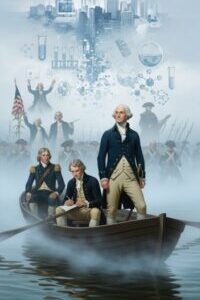
It’s interesting to think about what the world looked like for America’s Founding Fathers. 1776 wasn’t a revolutionary year just for giving birth to America; it also kicked off the first Industrial Revolution with James Watt’s invention of the steam engine and modern capitalism with Adam Smith’s publishing of The Wealth of Nations.
Many of the debates we have today about economics, industry, and politics would have been nonsensical in 1775. For people living at the time, feudalism, mercantilism, and the divine right of kings just seemed the natural way of the world. They never experienced anything else. But after 1776, everything would change.
There appears to be a similar transition afoot today. The neoliberal order is under siege, while technologies like artificial intelligence, quantum computing, and synthetic biology are creating completely new paradigms. Much like the Founders realized 250 years ago, the hardest part isn’t necessarily inventing the future, but letting go of the past.
What Euclid’s Geometry Never Got Straight
The basic geometry we learn in grade school, also known as Euclidean geometry, is rooted in axioms drawn from everyday experience, such as the principle that two parallel lines never intersect. For thousands of years, mathematicians built proofs based on those axioms to create new knowledge, such as how to calculate the height of a distant object. Without these insights, our ability to shape the physical world would be greatly diminished.
But what if one of those foundational assumptions was wrong? What if space itself could be curved, so that lines that appear parallel might eventually intersect? In the 19th century some of the world’s most celebrated mathematicians, like Gauss, Lobachevsky, Bolyai, and Riemann, started asking those questions and came up with entirely new geometries based on non-Euclidean spaces.
At the time, these were seen as purely theoretical and of no use in daily life. The universe, as we experience it, doesn’t curve in any appreciable way, which is why police ask us to walk a straight line if they think we’ve been drinking too much. So despite the prestige of those proposing it, the idea of non-Euclidean geometry was widely dismissed, often ridiculed, and largely ignored.
But when Albert Einstein started to think about how gravity functioned, he began to suspect that the universe did, in fact, curve over large distances. To make his theory of general relativity work, he had to discard the old Euclidean thinking and embrace new mathematical concepts. Without those critical tools, he would have been hopelessly stuck.
Yet today we make use of non-Euclidean spaces every day, because our GPS systems need to work across distances large enough that the curvature of space becomes a practical matter. They use Einstein’s equations to correct for that difference. So every time you use GPS to drive somewhere, when you get to where you’re going you effectively prove the theory.
How 25-Year-Old Austrian Revealed The Flaw Aristotle’s Logic
In terms of longevity and impact, only Aristotle’s logic rivals Euclid’s geometry. At the core of Aristotle’s system is the syllogism: an argument built from propositions consisting of a subject and a predicate. If the propositions in the syllogism are true, then the argument has to be true. For more than two thousand years, this idea—that correct reasoning guarantees truth—served as a foundational principle of Western thought.
Yet, much like with geometry, cracks eventually began to appear. At first, logicians noticed minor flaws that had to do with Russell’s paradox, which arose with sets that are members of themselves. A simpler form, known as the barber paradox, states that the barber shaves every man in town who doesn’t shave themselves (then who shaves the barber?).
At first, these seemed like strange anomalies, minor exceptions to rules that could be easily explained away. Still, the more scholars tried to close the gaps, the more problems appeared, leading to a foundational crisis. It would be resolved when a young logician named Kurt Gödel published his theorems showing that the dream of a perfectly complete logical system was fatally flawed. The universe, at its core, defies logic.
In a strange twist, another young mathematician, Alan Turing, built on Gödel’s work to create an imaginary machine that would make digital computers possible. In other words, in order for Silicon Valley engineers to code to create computable worlds online, they need to use machines built on the premise that perfectly logical systems are inherently unworkable.
Today, computers have become such an integral part of everyday life, it’s hard to remember a time when they didn’t exist and we have the limits of logic to thank for it.
Hippocrates’ Other Idea And Why It Had To Go
Before the germ theory of disease took hold in medicine, the miasma theory, the notion that bad air caused disease, was predominant. Again, from a practical perspective this made perfect sense. Harmful pathogens tend to thrive in environments with decaying organic matter that gives off bad smells. So avoiding those areas would promote better health.
Once again, this basic paradigm would begin to break down with a series of incidents. First, a young doctor named Ignaz Semmelweis showed that doctors could prevent infections by washing their hands, which suggested that something besides air carried disease. Later, John Snow was able to trace the source of a cholera epidemic to a single water pump.
Perhaps not surprisingly, these were initially explained away. Semmelweis failed to present his data convincingly and was less than an effective advocate for his work. John Snow’s work was statistical, based on correlation rather than causality. A prominent statistician, William Farr, offered alternative explanations that preserved the prevailing view.
Still, as doubts grew, more scientists looked for answers. The work of Robert Koch, Joseph Lister, and Louis Pasteur led to the germ theory. Later, Alexander Fleming, Howard Florey and Ernst Chain would pioneer the development of antibiotics in the 1940s. That would open the floodgates and money poured into research, creating modern medicine.
Today, we have gone far beyond the germ theory of disease. Even lay people understand the concept of pathogens, such as bacteria and viruses, and life expectancy has nearly doubled since the time of Semmelweis.
Building A New Path Forward
In November 1989, two watershed events changed the course of world history. The fall of the Berlin Wall would end the Cold War and open up markets across the world. That very same month, Tim Berners-Lee would create the World Wide Web and usher in a new technological era of networked computing.
It seemed, as Francis Fukuyama famously wrote, like the end of history. The conflict between communism and capitalism appeared to be over. Just one model remained. But, as Fukuyama also noted—and as I saw firsthand living in Moscow—the human urge to assert identity remained. We weren’t witnessing an end, but the beginning of a major realignment, in which the neoliberal order, globalism, the Washington Consensus, and digital technology would reign.
But almost from the beginning, there were deep misgivings. Many developing countries, pressured by the IMF and World Bank to adopt policies that would never have been accepted in wealthier nations, chafed. And even in advanced economies, many felt left behind as globalization and offshoring hollowed out their economic lives.
Today, “new right” intellectuals like Patrick Deneen have argued that liberalism has undermined foundational aspects of society such as family, religion, and community. Others, like Curtis Yarvin, argue that democracy itself is inefficient and what we need are tech-style CEO-like sovereigns. Meanwhile, Ezra Klein and Derek Thompson have called for an abundance agenda that focuses more on building what we need than preventing what we don’t want.
We are now, much like America’s Founding Fathers, tasked with finding a way forward when the path is frustratingly unclear. Like generations that came before us, we will need to struggle with new paradigms made possible by advances in technologies. Yet, also like our forebears, our biggest challenge is not a lack of possibilities, but a lack of consensus.
We tend to replace questions about what kind of future we want with questions about technology. But as Martin Heidegger explained long ago, we can’t build for the world until we know how we want to live in it.
Greg Satell is Co-Founder of ChangeOS, a transformation & change advisory, a lecturer at Wharton, an international keynote speaker, host of the Changemaker Mindset podcast, bestselling author of Cascades: How to Create a Movement that Drives Transformational Change and Mapping Innovation, as well as over 50 articles in Harvard Business Review. You can learn more about Greg on his website, GregSatell.com, follow him on Twitter @DigitalTonto, watch his YouTube Channel and connect on LinkedIn.
Like this article? Join thousands of changemakers and sign up to receive weekly insights from Greg’s DigitalTonto newsletter!
Image generated by Nano Banana 2


